
This distinction becomes important when the same physical Trade Item is sold to the consumer and is also the unit handled in general distribution.
For example, a large retail multipack may be one Individual Sales Unit with one GTIN, while carrying both an EAN-13 barcode for retail Point-of-Sale and an ITF-14 barcode for warehouses and distribution centres.
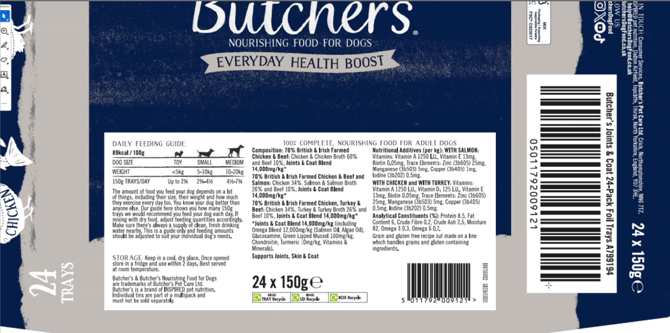
The important principle is:
One Trade Item can have one GTIN represented in multiple barcode symbologies for different scanning environments.
GTIN and barcode symbology are different concepts
In the GS1 system, the GTIN identifies the Trade Item. The barcode symbology determines how that identifier is represented in a machine-readable data carrier.
GS1 states that the same GTIN can be encoded in different barcode types depending on where the item will be scanned. EAN/UPC barcodes are commonly used at retail Point-of-Sale, while ITF-14 is primarily used in general distribution and is particularly suitable for printing directly on corrugated packaging. (GS1)
GTINs can have a length of 8, 12, 13 or 14 digits.
| GTIN | Common barcode | Typical scanning environment |
|---|---|---|
| GTIN-8 | EAN-8 | Retail Point-of-Sale |
| GTIN-12 | UPC-A | Retail Point-of-Sale |
| GTIN-13 | EAN-13 | Retail Point-of-Sale |
| GTIN-8, GTIN-12, GTIN-13 or GTIN-14 | ITF-14 | General distribution |
A GTIN and the barcode carrying that GTIN should therefore be treated as separate concepts.
How this relates to the SyncForce Golden Hierarchy
In the SyncForce Golden Hierarchy, a Trade Item represents a physical item traded at a defined level of the supply chain and has its own GTIN.
Sales Units and Transport Units are both Trade Items, but they represent different physical hierarchy levels. (SyncForce)
The hierarchy is:
- Sales Unit
- Individual Sales Unit
- Grouped Sales Unit
- Transport Unit
An Individual Sales Unit is a Sales Unit sold as one physical unit. It combines the Product with its packaging and has its own GTIN.
A Transport Unit is a separate Trade Item created mainly for handling, storage and distribution. It contains one or more Sales Units and has its own GTIN.
This means that a barcode does not create a hierarchy level. A hierarchy level exists because there is a separate physical Trade Item.
Trade Settings describe the role of a Trade Item
Every Trade Item in SyncForce can have Trade Settings such as:
- Base Unit
- Consumer Unit
- Delivery Unit
- Orderable Unit
- Invoice Unit
- Price on Pack

These settings describe how the Trade Item is used in commerce and distribution. They do not create another Trade Item.
This distinction is important.
An Individual Sales Unit can, for example, have:
| Property | Value |
|---|---|
| Trade Item type | Individual Sales Unit |
| Consumer Unit | Yes |
| Delivery Unit | Yes |
| Orderable Unit | Yes |
| GTIN | 5011792009121 |
The Trade Item is still an Individual Sales Unit.
Delivery Unit = Yes indicates that this same Trade Item is also used as the physical unit for delivery or general distribution.
This concept is consistent with the GS1 data model, where a Trade Item can have several functional roles, such as consumer unit, orderable unit, invoice unit and despatch unit. (GS1 Reference)
Example: a large consumer multipack
Consider a large multipack where the individual items inside are not intended for separate resale.
The complete multipack is sold to the consumer as one item.
The same physical multipack is also the unit handled through warehouses and distribution centres. There is no additional outer case.
In SyncForce this can be modelled as:
| Property | Value |
|---|---|
| Trade Item type | Individual Sales Unit |
| Consumer Unit | Yes |
| Delivery Unit | Yes |
| GTIN | 5011792009121 |
There is no separate Transport Unit.
The physical hierarchy is simply:
Product
↓
Individual Sales Unit
GTIN: 5011792009121
The fact that the Sales Unit is also used as a Delivery Unit does not add another physical hierarchy level.
Why are there two barcodes on the same pack?
The same Trade Item is scanned in two different environments.
| Scanning environment | Barcode | Encoded value |
|---|---|---|
| Retail Point-of-Sale | EAN-13 | 5011792009121 |
| General distribution | ITF-14 | 05011792009121 |
At retail Point-of-Sale, the EAN-13 barcode is scanned.
In warehouses and distribution centres, the larger ITF-14 barcode can be used.
GS1 UK specifically documents this scenario for items that are sold to consumers but are also handled directly in distribution. It notes that an additional ITF-14 may appear alongside the EAN barcode, depending on packaging or trading-partner requirements. The ITF-14 must contain the same GTIN, with a leading zero added when a GTIN-13 is represented in the required 14-digit format. (GS1 UK)
So the pack can contain:
EAN-13
5011792009121
Purpose: Retail Point-of-Sale
ITF-14
05011792009121
Purpose: General Distribution
Both identify the same Trade Item.
The leading zero does not create a new GTIN
This is one of the most important distinctions.
The additional 0 is a padding character used to represent the GTIN-13 in the 14-digit format required by ITF-14.
GS1 UK explicitly describes the leading zero this way. (GS1 UK)
Therefore:
5011792009121
and
05011792009121
represent the same GTIN. This is different from a real Transport Unit
Now consider a different situation.
A manufacturer sells individual packs to consumers, but twelve of those Sales Units are packed into a corrugated case for distribution.
There are now two physical Trade Items:
| Level | Example | GTIN |
|---|---|---|
| Individual Sales Unit | Consumer pack | 5011792009121 |
| Transport Unit | Case containing 12 Sales Units | Separate GTIN |
The Transport Unit has its own dimensions, weight, contained quantity and packaging. Under the SyncForce Golden Hierarchy, it is therefore a separate Trade Item and has its own GTIN. (SyncForce)
Its logistics barcode might be ITF-14, but it represents the GTIN of the Transport Unit, not a padded representation of the GTIN of the Sales Unit.
This gives two fundamentally different situations.
No separate Transport Unit
Individual Sales Unit
GTIN: 5011792009121
Consumer Unit: Yes
Delivery Unit: Yes
Barcodes:
| Barcode | Value |
|---|---|
| EAN-13 | 5011792009121 |
| ITF-14 | 05011792009121 |
One Trade Item, one GTIN, two barcode representations.
Separate Transport Unit
Individual Sales Unit
GTIN: 5011792009121
↓ packed into
Transport Unit
GTIN: separate GTIN
Each physical Trade Item has its own GTIN.
Barcode representation should therefore be separate from Trade Item identification
For SyncForce Circular PIM, the GTIN should remain an attribute of the Trade Item.
Barcode representations should be managed separately.
Conceptually:
| Trade Item data | Example |
|---|---|
| Trade Item type | Individual Sales Unit |
| GTIN | 5011792009121 |
| Consumer Unit | Yes |
| Delivery Unit | Yes |
| Orderable Unit | Yes |
And separately:
| Barcode symbology | Encoded value | Scanning environment |
|---|---|---|
| EAN-13 | 5011792009121 | Retail Point-of-Sale |
| ITF-14 | 05011792009121 | General Distribution |
This prevents a barcode representation from being mistaken for another Trade Item.
Using Trade Settings to suggest barcode requirements
The existing SyncForce Trade Settings define which barcode representations may be relevant.
For example:
Consumer Unit = Yes
This indicates that the Trade Item may need a barcode suitable for retail Point-of-Sale, such as EAN-8, UPC-A or EAN-13, depending on its GTIN and market.
Delivery Unit = Yes
This indicates that the Trade Item is also used in general distribution. A logistics barcode such as ITF-14 or GS1-128 may therefore be applicable.
Consumer Unit = Yes + Delivery Unit = Yes
This identifies the specific scenario described in this article.
SyncForce can then indicate that the same Trade Item may require both a retail barcode and a barcode for general distribution.
For example:
| Setting | Value |
|---|---|
| Consumer Unit | Yes |
| Delivery Unit | Yes |
| GTIN | 5011792009121 |
Possible barcode representations:
| Barcode | Value | Use |
|---|---|---|
| EAN-13 | 5011792009121 | Retail POS |
| ITF-14 | 05011792009121 | General Distribution |
Delivery Unit should not automatically mean ITF-14
A Trade Item being a Delivery Unit does not by itself determine the barcode symbology.
ITF-14 is one option for general distribution. It can only encode the GTIN and is particularly suitable for printing directly onto corrugated materials. (GS1)
GS1-128 can also be used in logistics and can encode a GTIN together with additional GS1 data such as batch numbers, serial numbers or expiry dates. (GS1)
Summary
A Trade Item may need to operate in more than one part of the supply chain.
A large multipack can, for example, be:
Individual Sales Unit
Consumer Unit = Yes
Delivery Unit = Yes
without requiring a separate Transport Unit.
If the same physical Trade Item is scanned both at retail Point-of-Sale and in general distribution, it may carry different barcode representations of the same GTIN.
In the UK example:
GTIN: 5011792009121
EAN-13: 5011792009121
ITF-14: 05011792009121
The leading zero in the ITF-14 representation does not create another GTIN or Trade Item.
For SyncForce Circular PIM, the resulting modelling principle is:
Hierarchy defines the Trade Item. Trade Settings define its role in the supply chain. Barcodes define how its GTIN is represented in different scanning environments.
Transition to QR Code powered by GS1
For a Trade Item that today carries both an EAN/UPC barcode for Retail POS and an ITF-14 barcode for General Distribution, the transition to 2D happens in three stages.
Today, both linear barcodes are required because the same GTIN must be readable in two different scanning environments.
During the 2D transition, a QR Code powered by GS1 is added alongside the existing EAN/UPC and ITF-14, so the pack may temporarily carry three data carriers while retailers, warehouses and logistics service providers migrate their scanning systems.
Once fully migrated, meaning that both Retail POS and General Distribution environments can process the GS1 QR Code, the QR Code can become the single multipurpose data carrier for the Trade Item and the EAN/UPC and ITF-14 can be removed. The same QR Code can then identify the Trade Item at checkout, throughout distribution and logistics, and provide access to digital product information through GS1 Digital Link.